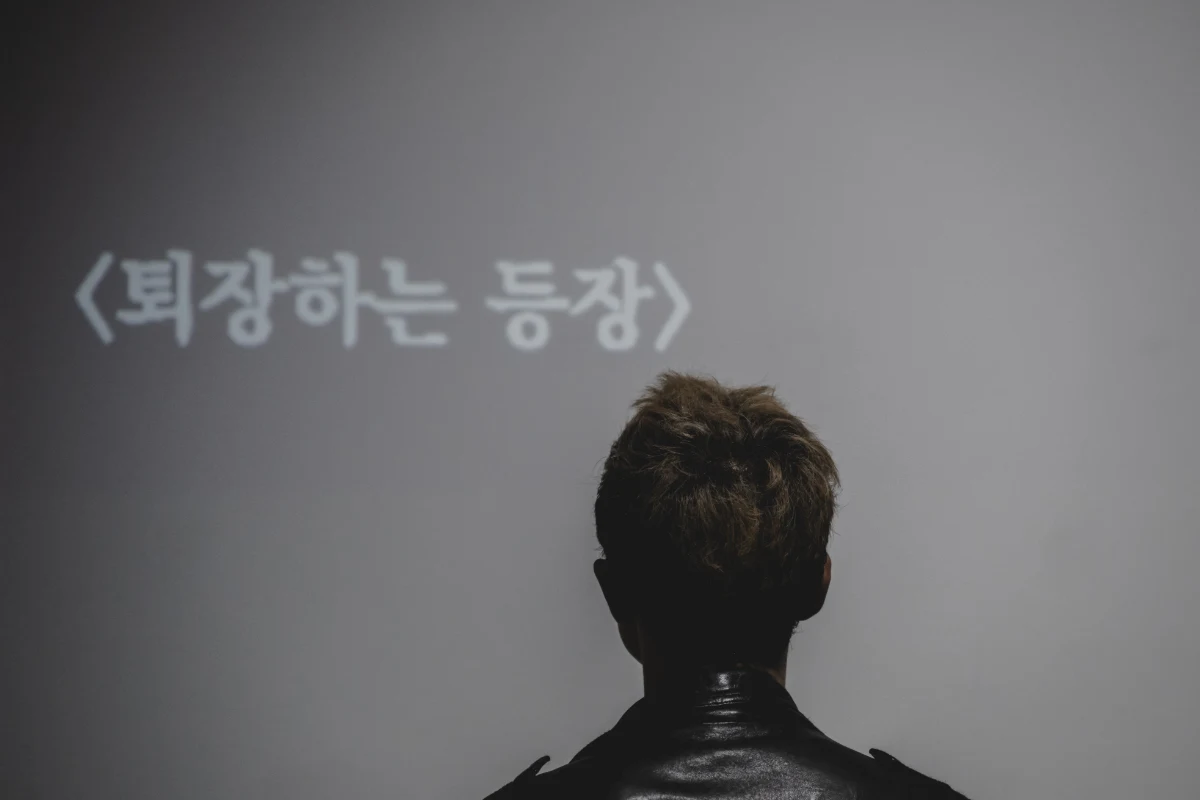
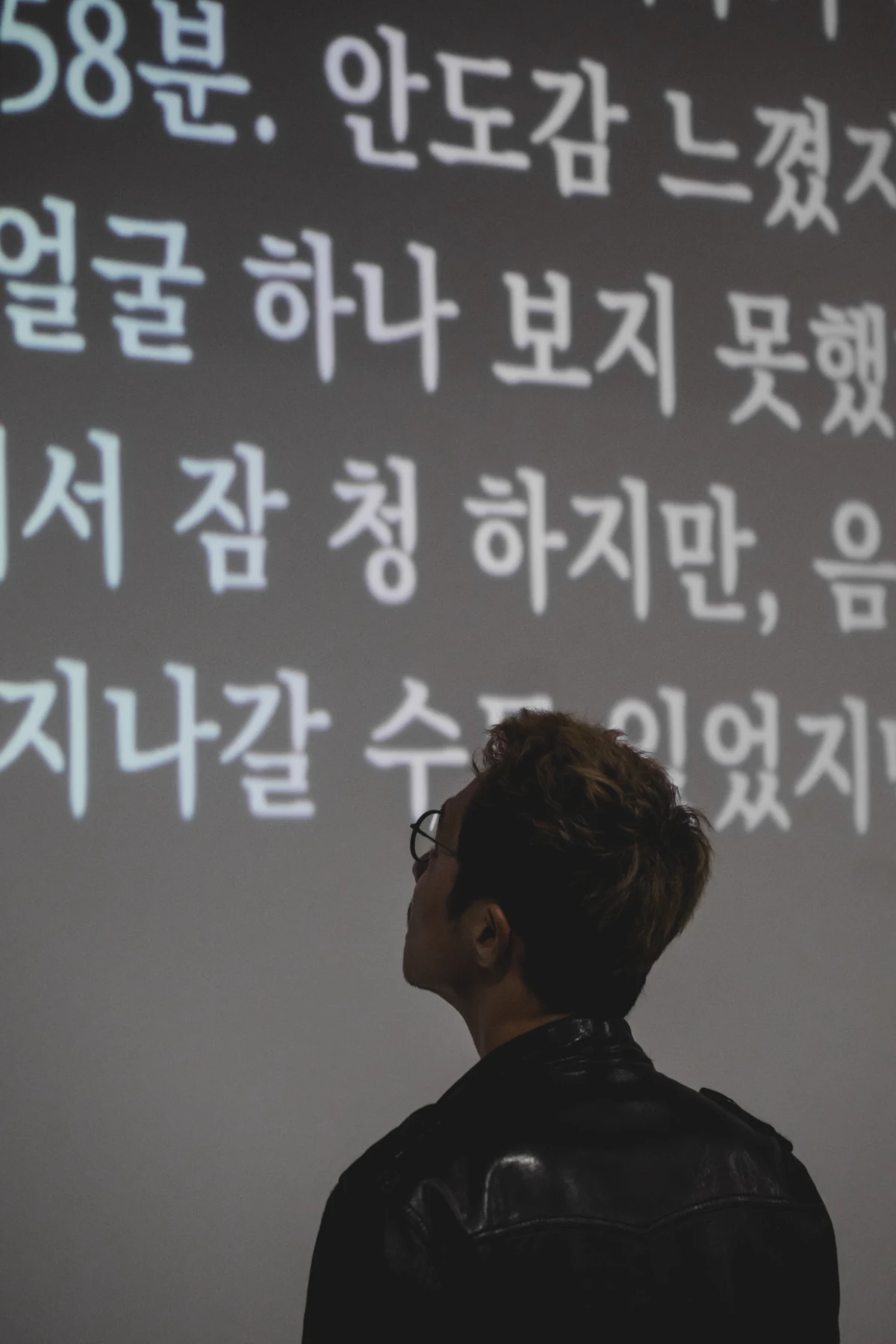
Exi(s)t Strategy 1
- 2026.9.20.IFI Yogyakarta, 2026 Institut Français Indonesia
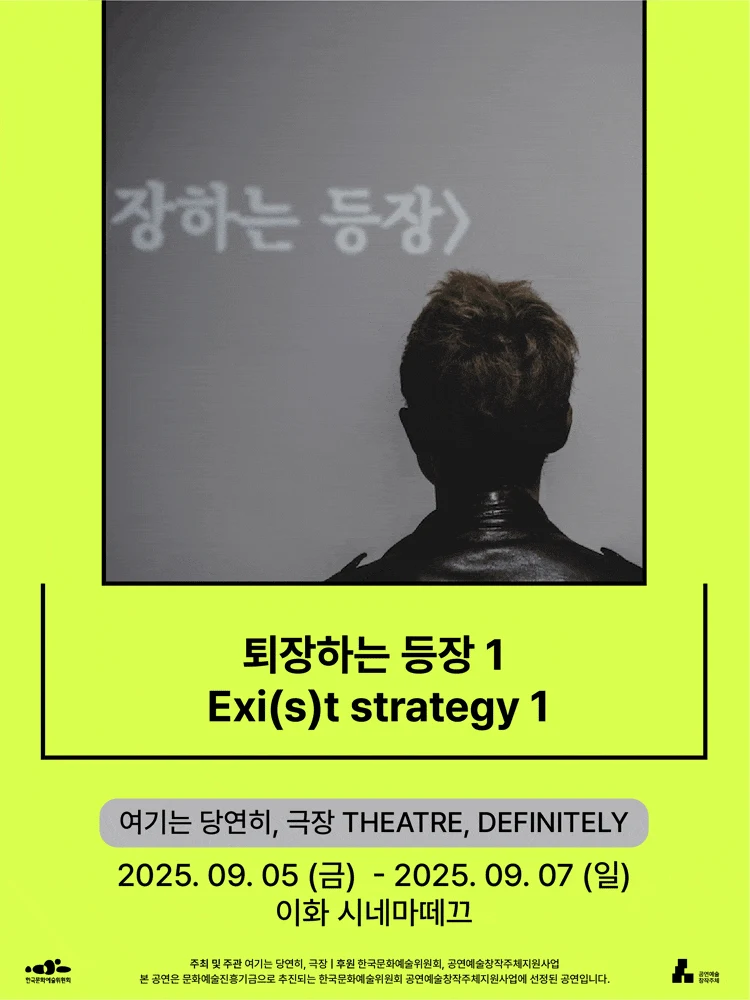
- 2025.9.5. – 9.7.Ewha Cinematheque, 23th Seoul Marginal Theatre Festival
- 2023.7.14. – 7.16.Post Territory Ujeongguk, 21th Seoul Marginal Theatre Festival
Credits
2026
2025
2023
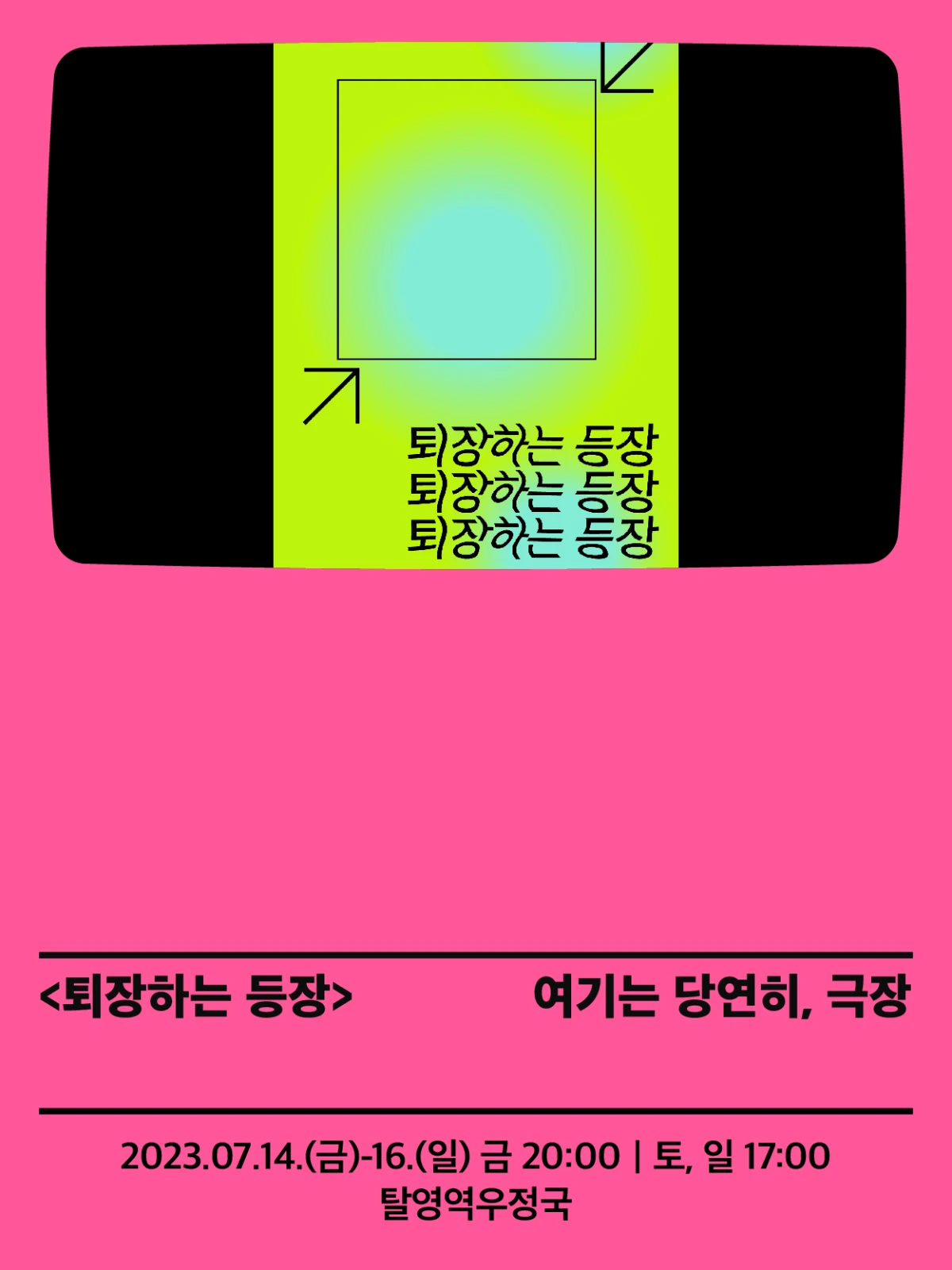
Through entrances and exits—the terms of queer existence—this work tells of the disappearance of queer youth and the solidarity among them.
A life that swells even without being slapped.
“She must have reached a point where she could no longer bear having to exit over and over without ever once being allowed to truly enter.”
Thomas is summoned by his teacher and struck ten times on the buttocks for being unnatural. He then takes the blows that Charles, who longs to become Jasmine, would otherwise receive in the future, and leaves. Thomas finds himself adrift on a mattress at sea. Onstage at the Christmas school pageant, Charles must play a child allowed to be strange only within the bounds of what is considered natural. He receives a note passed to him by Cecilia, who has been trapped on that stage. The note was sent to Charles from the distant past by a child Cecilia called her older sister—a child who, exhausted from waiting for a fucking entrance onto the stage, decided to remove herself from it.
There are weeping faces, naturally unnatural, that can no longer bear having to exit over and over without ever once being allowed to truly enter. They enter, yet seem never to have entered: their entrance takes the form of an exit. A curtain-call stage from which there is no escape. There are those who can neither exit nor enter the world, and who sometimes decide to remove themselves from it.
The world has evolved. It seems to make room for strange beings. But the moment their strangeness exceeds the bounds of what the world deems natural, it slaps them. Within this closed world of naturalness, where even strangeness must appear plausibly natural, the world demands that they become strange naturally, seamlessly.
Korea does not outright forbid queerness—because on the surface, it appears to be a fairly progressive country. Yet Korea allows queerness only within the limits of what appears “natural.” This play vividly exposes the contradictions of contemporary Korea through a striking literary voice.
Yet taking the blows of the future in advance, in such a world, is also an act for a friend who would otherwise be struck in that future. It is a way of bringing into being “school rules that no longer allow children like me to be beaten.” Rules prohibiting corporal punishment have been established. But you can’t make a life out of not getting slapped in the face.
The work calls out to those forever trapped in the conventions of naturalness imposed by the Christmas pageant stage; those drifting at sea on a mattress barely a handspan wide; those caught between entrance and exit who have decided to remove themselves. Those who disappeared because they could not hold another’s hand, or because they were holding another’s hand, or because they could not reach out to take it. And there are words that have already arrived—because they have mourned all those who mourn these beings, or because they are mourning them in advance.
In 2025, Ewha Womans University denied the Korea Queer Film Festival permission to use Art House Momo, its on-campus cinema. Students formed the Ewha Queer Film Festival Organizing Committee to protest the university’s censorship and violation of human rights. In solidarity, the Seoul Marginal Theatre Festival and the theater collective theatre, definitely presented Exi(s)t Strategy 1 at Ewha Cinematheque, a student-run autonomous space on campus.
That same year, Exi(s)t Strategy 2 was created by Women with Disabilities Empathy, and Exi(s)t Strategy 0 was developed with young people from the Teen Queer Crisis Support Center DDingdong, forming the Exi(s)t Strategy series.
In 2026, the work was presented as a staged reading in the FOCUS program of the Asian Playwrights Meeting (APM). The performance introduction is as follows:
We cordially invite you to experience Exi(s)t Strategy, a profound and poetic performance as part of the Asian Playwrights Meeting 2026.
Exploring the paradox that an exit may not signify an ending, the performance contemplates how certain presences only become visible after they have vanished. Through fluid, non-realistic portrayals, Exi(s)t Strategy invites us to move beyond conventional character tracking — the script deliberately does not assign dialogue to specific figures, allowing the words to flow as a collective resonance rather than individual voices.
The title itself, an English rendering of the Korean “The Appearance That Exits,” beautifully captures this tension between presence and departure. With elegance and emotional depth, the piece reflects on memory, societal regulation of queerness, and the enduring power of connection that transcends death and time.
A thought-provoking theatrical experience that lingers long after the performance ends. Visit our official website for the tickets!