Buried Tongue
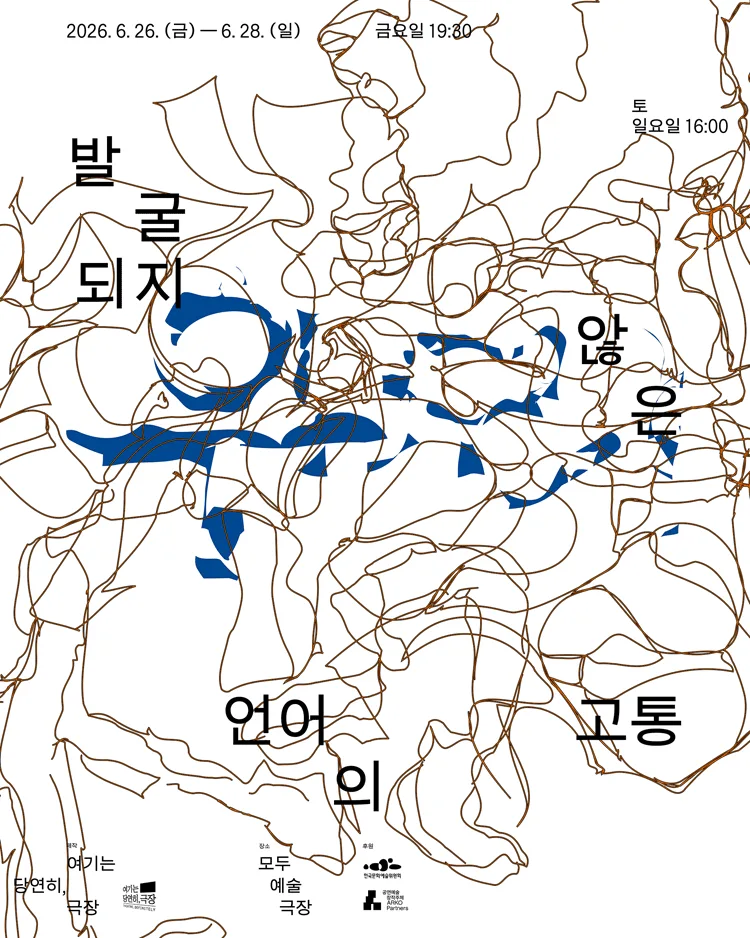
- 2026.6.26. – 6.28.MODU ART THEATER
Credits
2026
This suffering is not ours but belongs to that adult who must remain curled up in the darkness of day, and our suffering, which leaves us unable to breathe because of it, is not suffering because we cannot name it suffering,
.
The child who went out at lunchtime, who went out carrying so much milk, did not return.
.
I waited for you.
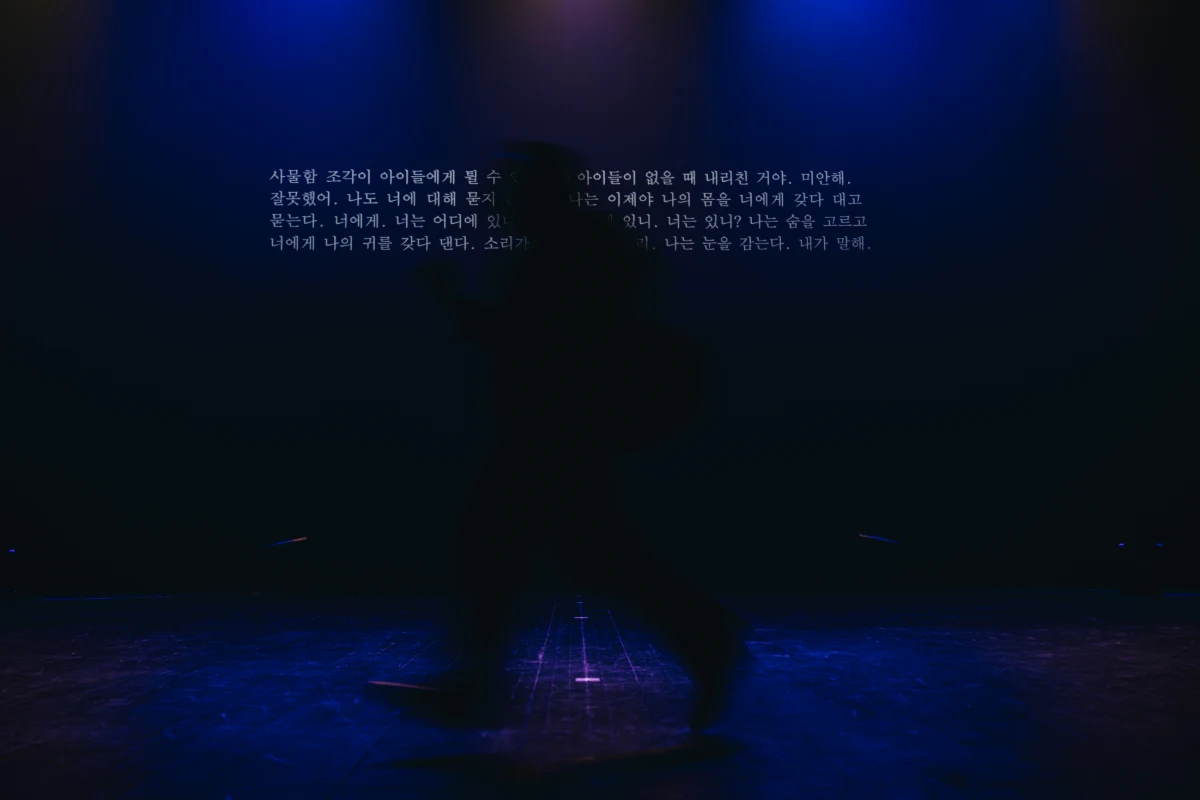
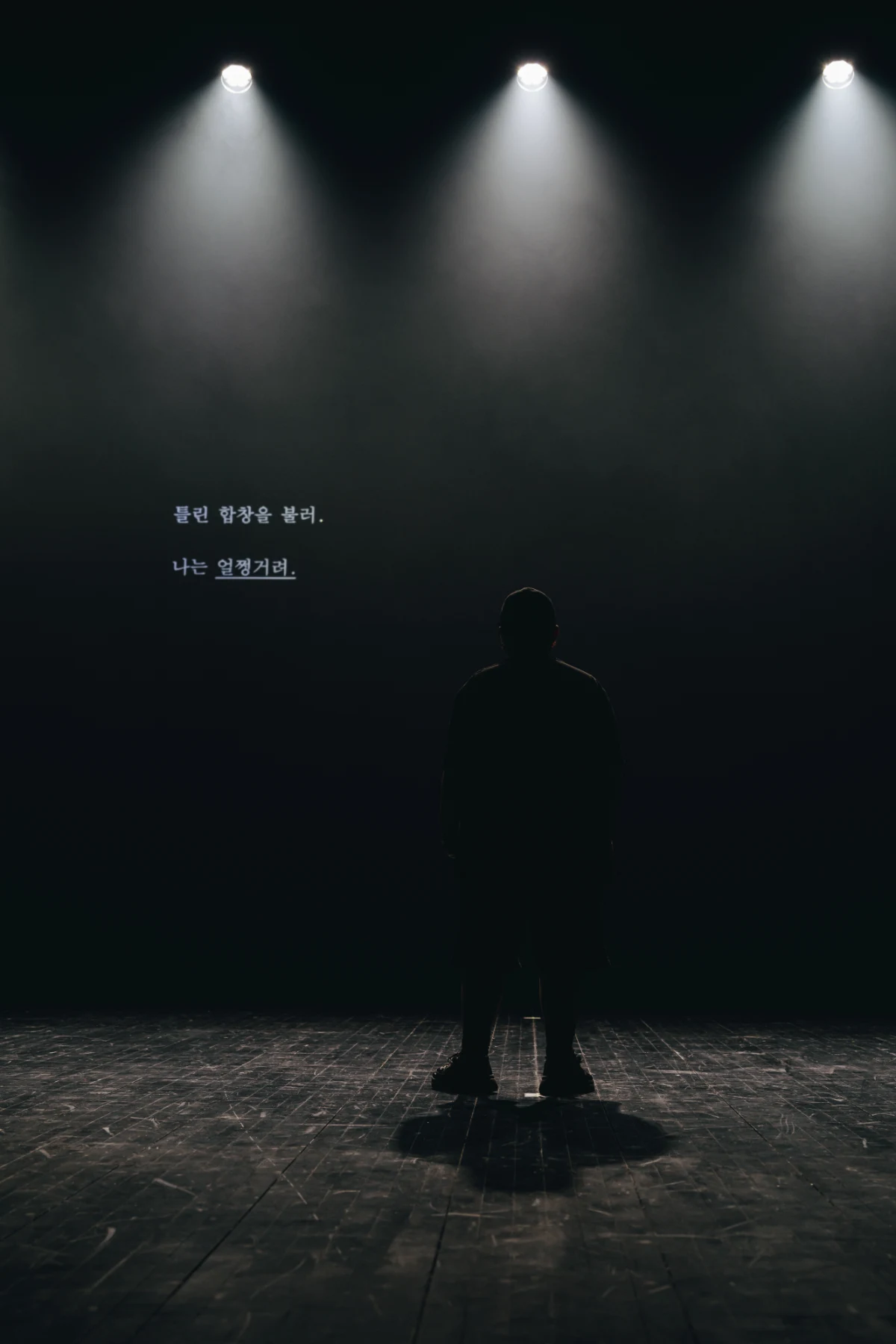
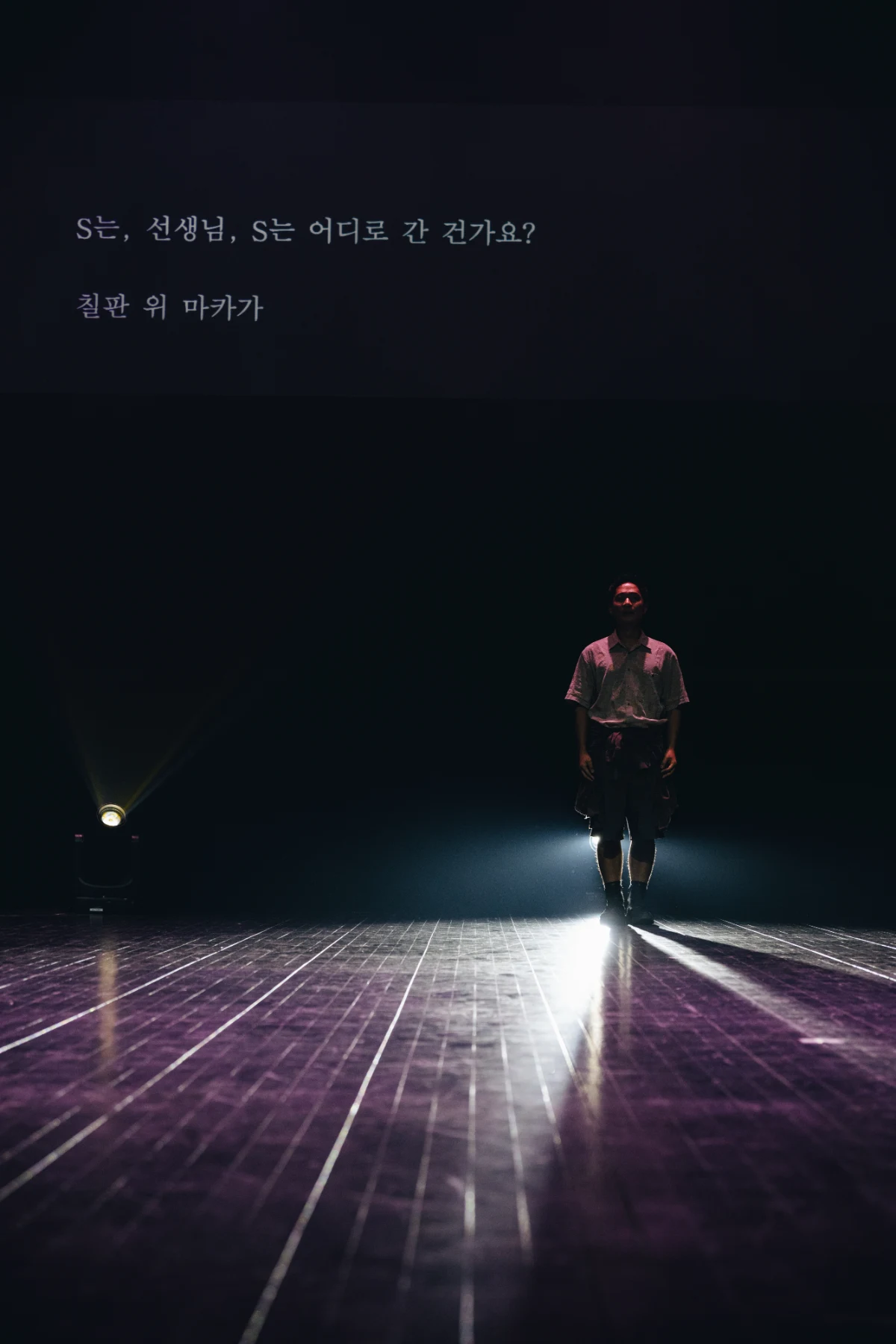
The performance asks what it means for a person to disappear when, without a language to articulate their suffering, they were never recognized as someone who suffers—and how another body might perform in the place they leave behind. When the words, gestures, emotions, and roles someone once carried can no longer be performed by that person, how can those who remain take them on?
Languages yet to be unearthed, or never unearthed at all; emotions and traces that could never be put into words. The performance does not seek to restore what is absent. Instead, acknowledging that restoration is impossible, it asks what those left behind can say and how they can perform. It seeks to reveal the empty space left by one person’s absence, and the shifts in language, bodies, and time around that space.
Playwright’s Note
“This suffering is not ours but belongs to that adult who must remain curled up in the darkness of day, and our suffering, which leaves us unable to breathe because of it, is not suffering because we cannot name it suffering,”
I wanted to ask why we so readily name some forms of suffering, while others are treated as though they never existed. Does suffering disappear when it remains unspoken? Or does it linger around us in the form of language yet to be unearthed?
Perhaps the experiences we do not recognize as suffering are those that have yet to find a language society accepts. The shame and humiliation children experience, their inexplicable anxiety and silence, are not treated as suffering because they do not constitute a grand tragedy. They are overshadowed by the suffering of adults.
Theatre is an art that struggles to respond to the urgency of the here and now. For that reason, The Suffering of Unearthed Language remained unstaged for a long time. There were always events that seemed more urgent, suffering that seemed greater, and so children’s suffering was continually pushed back in line.
I cannot possess a child’s language. Though I once passed through that world, I could not understand it then, and I cannot understand it now. Nor can I invent a child’s language or speak on their behalf. All I can do is hold language—the oldest and only tool I have—and cautiously imagine children’s worlds, lingering awkwardly beside them.
“We weren’t beautiful.”
There are queer children caught in poverty, violence, filth, and isolation. They try to rescue one another, to get one another out. This play sought to stay with them in the moments of erotic intimacy they created together, and in their moments of witnessing and fleeing. It began with a desire to look, for a long time, at the reality of their suffering as a truth that does not disappear. The playwright had to become a body through which that suffering passes, rather than someone who writes on its behalf. So I decided to enter a little deeper into their suffering, and stay a little longer.